
Skip to content

Case Study

BCIT Aerospace Technology Campus

Year Completed

2007

Capital Cost

$65M

Total Size

305k sqft.
About This Project

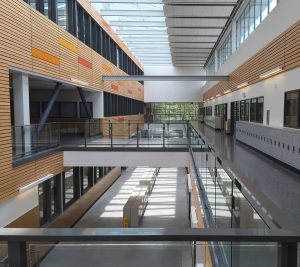
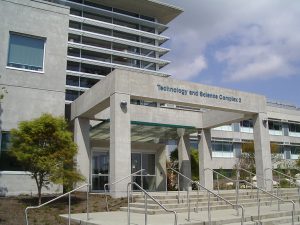
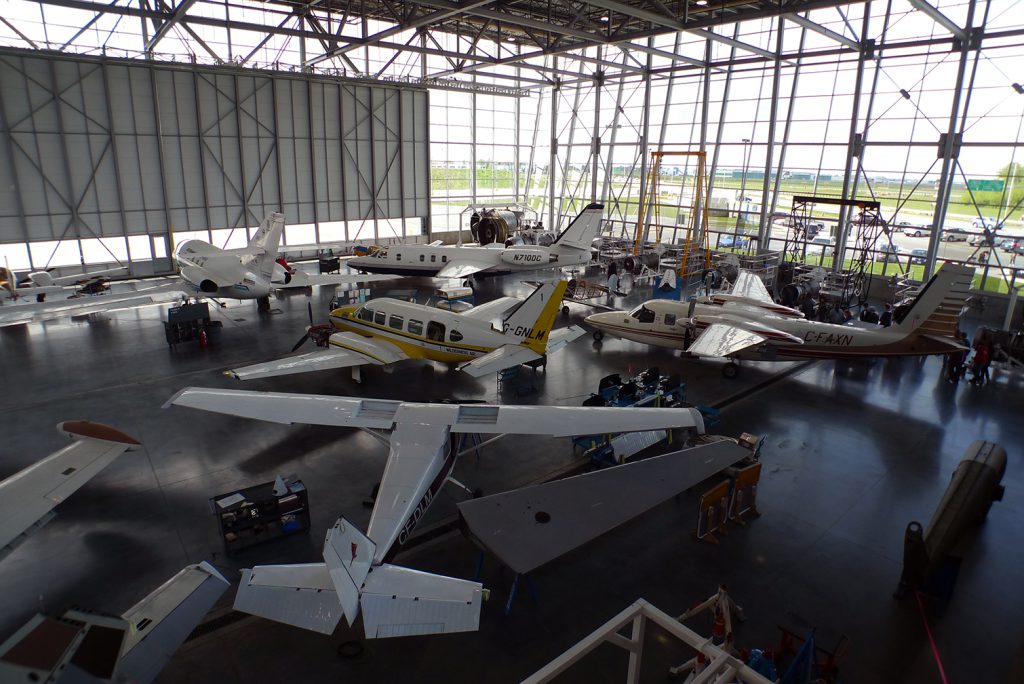
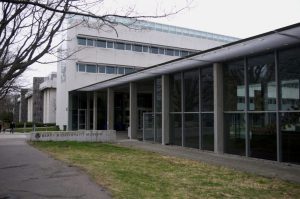
The BCIT Aerospace Technology Campus brings together spaces for study, research, lectures, and practical hands-on learning with the latest aviation technology, including air traffic control and on-route simulators.

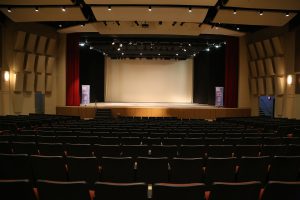
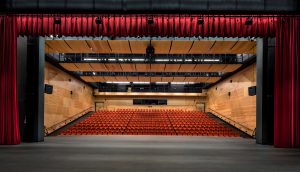
Within its 40,000 square foot glass hangar, one of Canada’s largest, students get their hands dirty working on BCIT’s fleet, which includes light propeller planes, transport aircraft, business jets, and helicopters. In addition, the campus comprises over 40 classrooms and labs, 36 faculty offices, 22 workshops, a lecture theatre, and library, as well as areas for students to eat, study, and socialize.

Acoustical challenges

Bringing together disparate spaces in close proximity—and beneath a busy flightpath, no less—was key in creating the school’s unique learning atmosphere. Yet for students learning technical information, a soundtrack of jet engines isn’t necessarily ideal for soaking up details.

Anticipating the confluence of noise from workshops, the hangar, and YVR flyovers, designers established noise zones throughout the campus, designating loud zones, such as the hangar and workshops, and quiet zones, for example, a study area along the Fraser River, and connecting them with a central hub.

Scope of services

BKL worked with the project’s architect, Kasian, and BCIT to ensure the goal of creating quiet and loud zones would become a reality. Increased background noise can affect the quality of any learning atmosphere, and the proximity of a major YVR flightpath meant that aircraft noise would be a dominant noise source across the campus.

BKL provided acoustical design advice for interior spaces including classrooms, office spaces, and atriums. Informed by decades of research, the most recent international standards for classroom acoustics formed the foundation for BKL’s recommendations. The firm suggested adding mass to strategic areas of the roof and installing custom laminated double-pane windows to help reduce aircraft noise in classrooms and limit its effect on teachers and students.

Project benefits

Decked out with the latest training technology, BCIT’s aerospace campus features a combination of quiet classrooms and noisy hands-on workspaces. BKL optimized classroom acoustics and speech intelligibility by making design recommendations that accord to the latest international standards, successfully limiting background noise from aircraft—both overhead and down the hall.

The People Behind Our Work

Our Technical Leads

  • Paul Marks
    Paul Marks

    M.Sc., MIOA

    Vice President, Project Delivery

    Paul Marks

    Paul Marks, M.Sc., MIOA

    Vice President, Project Delivery

    Paul Marks joined BKL in 2013. He is a full corporate member of the UK Institute of Acoustics and the Canadian Acoustical Association. He has over 20 years’ experience in the measurement, analysis, and assessment of noise, vibration, and acoustical matters and is a former member of the technical advisory team working with the UK government on noise and statutory nuisance issues. During this time, Paul has undertaken major projects within Europe, the Middle East, and Africa.

    He has experience in a wide range of multi-disciplinary environmental assessment projects including highway, rail, and air transportation infrastructure, mixed-use and brownfield regeneration schemes, renewable energy facilities, and power generation plants.

    Paul also has experience in a broad range of building and architectural noise assessment projects including the design of residential, office, educational, and commercial buildings. He has also undertaken acoustical studies for major infrastructure developments including work in the design of appropriate sound-fields for room-spaces in multi-occupancy buildings, including atriums and performance spaces. His work regularly involves close liaison with other acoustical engineers, planning consultants, architects, designers, and a variety of specialist environmental consultants.

    Paul is an experienced expert witness within the UK and has a broad experience of planning, licensing and statutory nuisance proceedings as well as being responsible for the successful design of a variety of impact mitigation measures including detailed engineering solutions, lay-out design, and administrative regimes where it has been necessary to closely liaise with clients, designers, and regulatory bodies in order to provide developments in accordance with sustainable principles.

  • Katrina Scherebnyj
    Katrina Scherebnyj

    M.A.Sc., P.Eng., MIOA

    Technical Director, Building Acoustics
    Katrina Scherebnyj

    Katrina Scherebnyj, M.A.Sc., P.Eng., MIOA

    Technical Director, Building Acoustics
    Katrina Scherebnyj started consulting in acoustics in 2007 in England and joined BKL in 2014. Her experience covers architectural acoustics, mechanical noise control, and environmental noise control, and she has worked on major projects in Canada, Europe, the Middle East, and Africa.

    In architectural acoustics, Katrina has worked on a range of new builds and refurbishment projects including schools, universities and higher education facilities, hospitals and healthcare facilities, performance spaces, cinemas, laboratories, office buildings, hotels, and residential buildings. She has provided acoustical design services in relation to sound insulation, room acoustics, and noise control.

    Katrina was a co-author of Music Accommodation in Secondary Schools: A Design Guide, published for the UK Department for Education in 2010. Researching the guide, she carried out acoustical measurements in the music departments of several schools and interviewed music teachers and students on the suitability of their music spaces.

    Katrina has extensive experience modelling internal sound fields and has carried out numerous models of performance spaces, lecture theatres, and other spaces where acoustical design is critical. She also has experience modelling outdoor noise propagation and has constructed and reviewed noise models for Columbia Containers in Vancouver, BC Children’s and Women’s Hospitals, the Pinnacle (once planned to be London’s tallest building), Crossrail, and other transportation projects.

    Katrina is a member of the Canadian Acoustical Association and the Institute of Acoustics (UK).