
Skip to content

Case Study

Port of Vancouver Noise Monitoring Program

Year Completed

Ongoing
About This Project

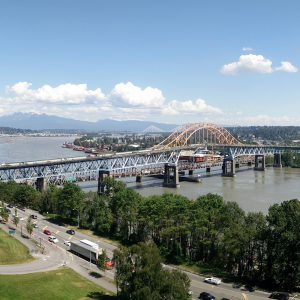
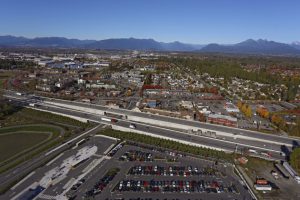
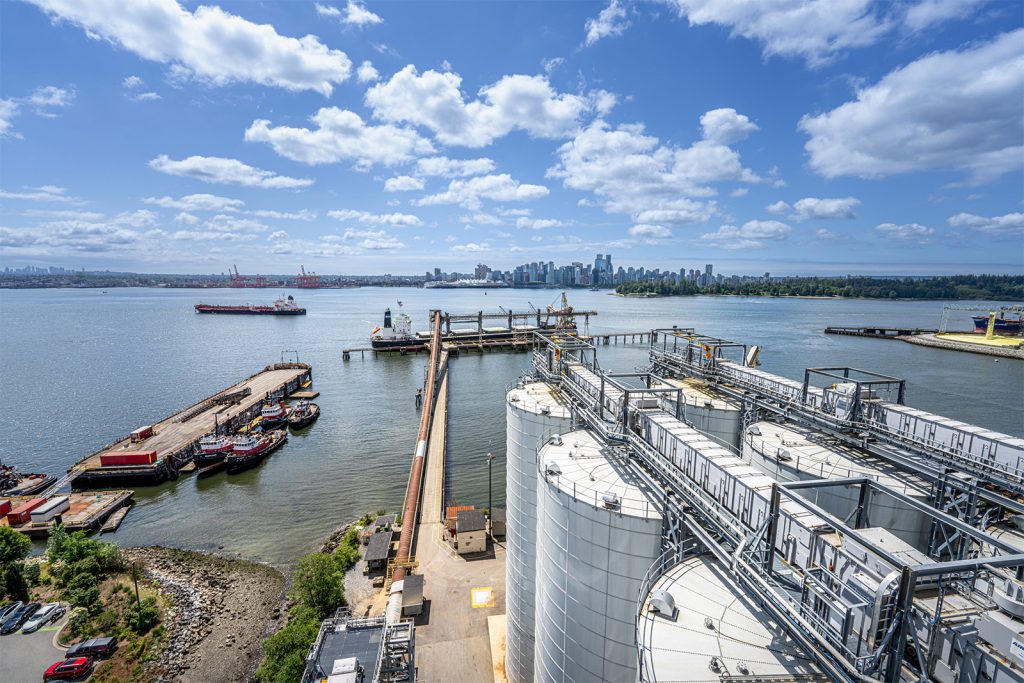
Managed by the Vancouver Fraser Port Authority, the Port of Vancouver comprises over 350 kilometers of shoreline, 1,000 hectares of land, and 16,000 hectares of water. From Roberts Bank in the south to Burrard Inlet in the north, this area borders 16 municipalities, and the traditional territories and treaty lands of several First Nations.

The Port is a major economic contributor in Canada: Over 147 million tonnes of cargo passed through in 2018. To facilitate this much activity, the Port operates all day, every day. Trucks, trains, and tenant operations need to keep pace. But such levels of transportation and operational activity can be noisy. The Port has grown over the years, and so have neighbouring communities. This ups the potential for Port-related noise to affect businesses and homes in surrounding areas.

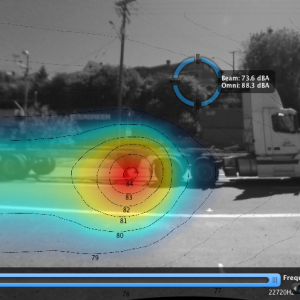
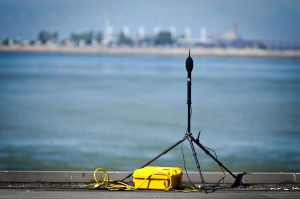
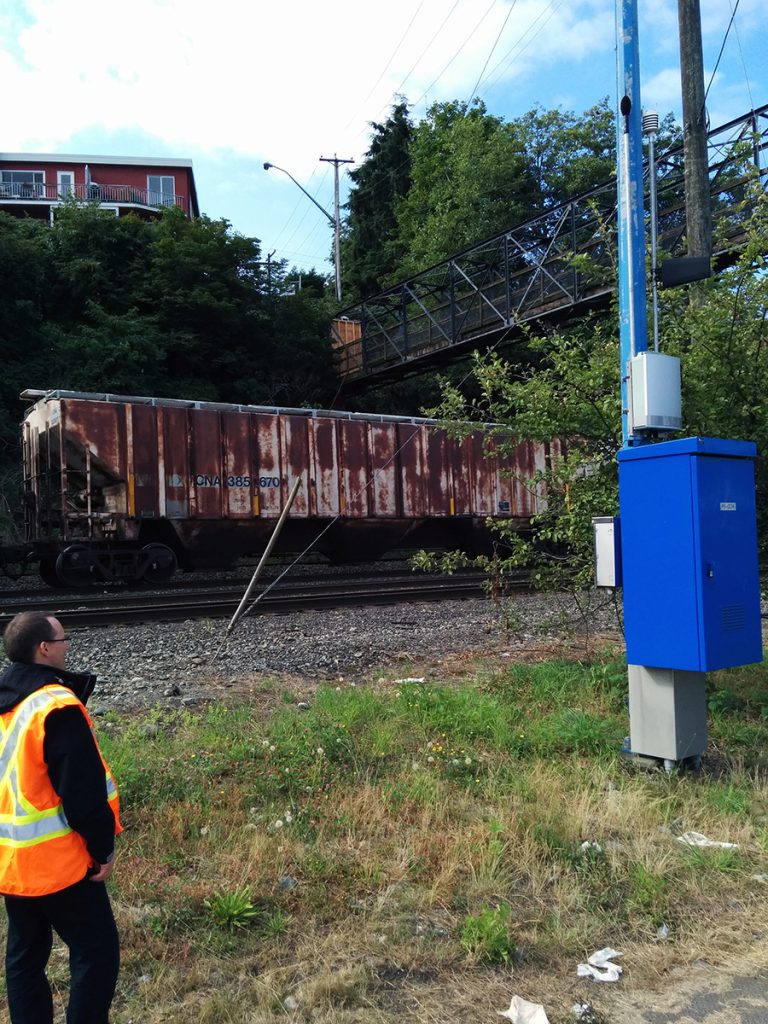
Between 2013 and 2015, the Port installed 11 permanent noise monitoring terminals (NMTs) along the north and south shores of Burrard Inlet and at Roberts Bank to measure Port-related noise in nearby communities and address community noise concerns. BKL was involved in the planning process to advise on selecting appropriate NMT locations along the new Low Level Road. The NMTs continually log sound data in or near communities potentially affected by noise from the Port.

In 2014, the Port wanted to better interpret the data it was collecting. The Port approached BKL and together they further developed the long-term noise monitoring program.

Scope of services

BKL worked with the Port to configure the NMTs, establish relevant noise metrics, set up noise alerts, export and analyze data, model noise in the community, and produce quarterly and annual reports.

BKL developed a unique one-number metric known as the Port Noise Rating (PNR) so the Port could better understand the significance of measured noise levels at each NMT. The PNR relates measured sound levels and potential impacts to surrounding communities based on detailed 3-D noise modelling and recent census data. The PNR allows the Port to interpret the reams of data gathered at the NMTs and understand how Port-related noise fits into the greater soundscape of each community. BKL identifies anomalies and trends in the noise data and keeps the Port apprised of issues, as well as opportunities to further improve the noise monitoring methodology or accuracy of the PNR.

Project benefits

In this ongoing project, BKL shares technical advice and best practices with Port staff operating the program and guides them in managing noise data and observing changes in noise levels. The firm also delivers quarterly reports and annual summaries, and helped the Port establish a system to deal with noise complaints. What’s more, BKL developed supporting documentation for Port operations staff and key messaging for each NMT for the Port’s website.

By creating a one-number metric, the PNR, BKL gave the Port an effective and efficient way to interpret the data from its noise monitoring program—despite the complexity of Port-related noise. The metric helped the Port meet its goals in setting up this long-term monitoring program and continues to provide an efficient way to track long-term patterns and understand how Port noise affects nearby communities.

The People Behind Our Work

Our Technical Leads

  • Headshot of Mark Bliss
    Mark Bliss

    P.Eng., INCE

    President

    Headshot of Mark Bliss

    Mark Bliss, P.Eng., INCE

    President

    Mark Bliss is a professional engineer and member of the Institute of Noise Control Engineering (INCE), with a bachelor’s degree in mechanical engineering from the University of British Columbia. He has practiced as an acoustical consultant since 2003.

    Mark specializes in environmental noise and vibration assessment, with extensive experience evaluating transportation, industrial, construction, entertainment, commercial and other noise impacts. He has worked with all levels of government on noise policy and planning, and has appeared as an expert witness before the British Columbia Supreme Court and at municipal council hearings.

    His work includes field measurement, noise modelling, mitigation assessment and detailed reporting, using national and international standards and specialized software such as Cadna/A. He has prepared Environmental Assessment Certificate applications to BCEAA, CEAA and IFC requirements, and has conducted third-party reviews and training in noise and vibration measurement and assessment.

    Mark also has extensive experience in building acoustics, working on new construction and renovations to address environmental and mechanical noise, improve speech intelligibility and room acoustics, and achieve effective airborne and impact sound isolation. His work draws on CSA, ISO, ASTM, ANSI, WHO, Health Canada and other recognized standards and guidelines.

  • Headshot of Gary Mak
    Gary Mak

    P.Eng., PMP

    Technical Director, Environmental Noise and Vibration

    Headshot of Gary Mak

    Gary Mak, P.Eng., PMP

    Technical Director, Environmental Noise and Vibration

    Gary Mak graduated from the University of British Columbia in 2011 with a bachelor’s degree in mechanical engineering and joined BKL the same year. Gary has since worked in the areas of environmental noise assessments, mechanical/industrial noise control, and architectural acoustics.

    Gary’s experience in architectural acoustics includes hospitals, educational facilities, performance spaces, offices, and operations buildings. His contributions to these projects include reviewing project acoustical requirements and building designs for partition sound isolation, room acoustics, mechanical noise control, and environmental noise control. For performance venues, Gary has experience working with more advanced techniques and parameters to assess and improve acoustical conditions for performers and audiences.

    Performing noise and vibration impact assessments for transportation, construction, industrial, and commercial projects, Gary has established baseline noise conditions, predicted future noise environments, rated noise impacts, and determined mitigation measures to meet project criteria. In particular, he has worked on mines, terminals, rail, transit centres, district energy centres, and other industrial and transportation projects.

    Gary is proficient in performing noise and vibration measurements with a variety of specialized equipment for investigations, bylaw assessments, room acoustics, and Sound Transmission Class (STC), and Impact Insulation Class (IIC) testing. He is also very familiar with using acoustical software including Cadna/A, Samurai, Insul, EASERA, and ODEON for impact analysis and design.

  • Headshot of Brigette Martin
    Brigette Martin

    P.Eng., WELL AP

    Technical Director, Sound and Vibration Measurements

    Headshot of Brigette Martin

    Brigette Martin, P.Eng., WELL AP

    Technical Director, Sound and Vibration Measurements

    Brigette Martin graduated from the University of Canterbury in New Zealand with a bachelor’s degree in mechanical engineering in 2009. Before joining BKL in 2015, Brigette worked as an acoustic consultant on various building and environmental projects throughout New Zealand and Australia.

    Brigette has extensive experience with environmental noise including assessing noise impacts and designing noise mitigation for gas compressor and pump stations, power generation sites, port terminals, and transformers sites; modelling construction noise, and developing construction noise abatement and management plans; designing noise controls and preparing noise management plans for mines and quarries; and monitoring benchmark noise, developing 3-D noise models, and designing noise walls for road infrastructure projects.

    In the area of building acoustics, Brigette has been involved in numerous projects and has consulted on sound insulation and mechanical services design, as well as controlling external noise intrusion and reverberation noise levels, and optimizing speech clarity for critical spaces.

    Over her career, Brigette has gained experience with a wide range of technical equipment and software including Insul, SoundPLAN, Cadna/A, SONarchitect, Brüel & Kjær analyzers, and numerous other sound level meters.

    Brigette has also developed and presented training courses for using acoustical software and sound level meters for acoustical engineers and clients throughout New Zealand and Australia.

  • Headshot of Trevor Cheng
    Trevor Cheng

    P.Eng., MIOA

    Managing Specialist Acoustical Consultant
    Headshot of Trevor Cheng

    Trevor Cheng, P.Eng., MIOA

    Managing Specialist Acoustical Consultant
    Trevor Cheng holds a bachelor of applied science (engineering physics) from University of British Columbia and joined BKL in January 2016, with experience in environmental and architectural acoustics, as well as condition monitoring, and machine vibration analysis and diagnostics.

    With BKL, Trevor has primarily been involved in transportation, commercial, industrial, and infrastructure projects. His work experience includes measuring baseline noise conditions, predicting future noise environments, assessing noise impact, and offering mitigation measures where appropriate.

    Trevor also has experience in architectural acoustics, working on hospitals, performance spaces, and multipurpose buildings. He is proficient in measuring noise insulation performance, reviewing building designs, and predicting noise levels from HVAC equipment.

    Prior to joining BKL, Trevor worked in London, UK, on a wide variety of projects ranging from large-scale architectural renovations to major airport improvement works. He has unique experience in measuring and assessing noise and vibration in buildings from underground rail sources.

    He also has experience using sound level meters by Brüel & Kjær, Norsonic, and Larson Davis, and software tools such as Cadna/A. He is familiar with ASTC/AIIC testing and using acoustic software including Insul, SONarchitect, and EASE for indoor noise predictions.

    Trevor is a member of the Institute of Acoustics (IOA) in the UK.