

Skip to content

Project Experience

Transportation

Ships and Other Vessels


About These Projects

The importance of controlling noise aboard ships has become widely recognized and quantitative noise level limits are now commonplace in specifications for new vessels and vessel refits.

The benefits of noise control range from crew safety and increased work efficiency on work boats to passenger comfort on ferries and yachts.

From its offices in Vancouver, British Columbia, the firm has served marine clients from the Pacific to the Atlantic and from the Arctic to the Gulf of Mexico.

The following are selected examples of relevant project experience:

11 m Harb. Comm. Launch, Robert Allan Naval Arch.

15 m Oil Recovery Vessels, Burrard Clean Operations

20 m Aluminum Fishboat, Peter Hatfield Naval Arch.

24 m Passenger Launch, John Manly Shipyard

50 m FDNY Fireboat, Robert Allan Naval Arch.

63 m 40-Car Ferry, Port Weller Dry Docks

100 m 125 Car Ferry, Vancouver Shipyards

115 m 215 Car Ferry, CSE Marine Services

122 m High-Speed Ferries, Catamaran Ferries International

139 m Trailer Ferry, Vancouver Shipyards

140 m Car Ferries, Todd Pacific Shipyards

168 m 470-Car Ferries, Integrated Ferry Constructors Norwegian Star Aft Lounge, Nor Cruise Lines Translink 3rd SeaBus, Victoria Shipyards

12 m Sonobuoy Recov. Vessel, Celtic Shipyard

33 m Acoustic Range Vessels, West Coast Manly Shipyard

33 m ORCA Naval Training Vessels, Victoria Shipyards Co.

48 & 64 m Passenger Submarines, Atlantis Submarines

56 m Coastal Defence Vessels, German Marine Naval Arch.

57 m YTT Torpedo Test Craft, McDermott Shipyard Army Landing Craft, McDermott Shipyard

20 m Hydrographic Survey, Peter Hatfield Naval Arch. 29 m Fisheries Patrol Vessel, Hike Metal

32 m Hydrographic Survey, Robert Allan Naval Arch. 50 m Search & Rescue Vessel, Versatile Pacific Shipyard

60 m Seismic Research Vessel, PGS Ocean Bottom Seismic

69 m Hydrographic Survey, Bel Aire Shipyard

70 m Type 1050 Nav. Aids, Vito Shipyard

72 m Fisheries Patrol Vessel, West Coast Manly Shipyard

75 m Fisheries Assessment, Robert Allan Naval Arch. 83 m Type 1100 Nav. Aids, Collingwood Shipyard

100 m Type 1200 Nav. Aids, Versatile Pacific Shipyard CCGS Sir Wilfred Laurier, Department of Fisheries and Oceans

Studies on (6) Towboats, Arctic Transportation Ltd. Studies on (15) Towboats, Northern Transportation Ltd.

Studies on (33) Towboats, Transport Canada

25 m Tug for Ports Canada, Riverton Boatworks

33 m Tug for Eastern Towing, Halifax-Dartmouth Shipyard

41 m Tug for Seaspan, Cove-Hatfield Naval Arch.

44 m Tug for Rivtow Towing, Talbot Jackson Naval Arch.

Common Acoustical Challenges:

  • Meeting specified noise limits
  • Crew safety and work efficiency
  • Passenger comfort
  • Underwater radiated noise
  • Engine and generator vibration isolation

Words From Our Clients

“The sea trials of the first vessel … showed that because of the careful use of insulation, normal conversations can be held on the bridge or in the expansive training room while the vessel is under full power – there’s no need to bark out orders on this beauty.”

Harbour and Shipping

Article on the ORCA vessel, March 2007

Featured Case Study

Torpedo and Ship Ranging Vessels

Torpedo and Ship Ranging Vessels

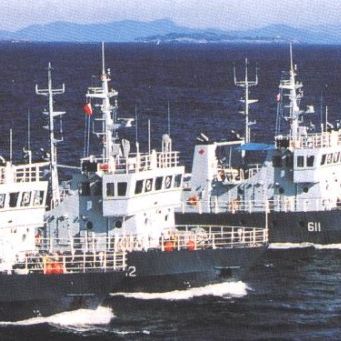
BKL was retained by West Coast Manly Shipyard to provide consulting services on the acoustical design of four 33 m Torpedo and Ship Ranging Vessels (TSRV) for the Canadian Department of National Defence. The primary purpose of these vessels was to serve as floating acoustic labs for the joint Canadian/US naval facility at Nanoose Bay where acoustic signatures are measured on both torpedoes and ships. The primary acoustical requirement of the TSRV's was to control underwater radiation of noise from diesel generators and other equipment to below ambient levels while the vessels are moored and operating in their "measurement mode". A second requirement was to achieve shipboard noise levels of 60 dBA or lower in accommodation areas with the vessels under way at full power. In order to control underwater noise radiation from ship service diesel generators, each of the two generator sets per vessel was mounted on a raft with two stage vibration isolation and totally enclosed in an acoustic enclosure. All connections were carefully designed to provide adequate flexibility and engine exhaust systems were isolated from the ship structure. To control shipboard noise levels with the vessels under way, main engines were isolated on single stage resilient mounts with flexible shaft couplings. All heating, ventilation and air conditioning systems were also carefully reviewed and silenced as necessary to achieve low noise levels both within accommodation areas and on exterior decks. Throughout the two year construction period, BKL Consultants personnel made periodic visits to the shipyard to observe and comment on the progress of all noise control measures. Shop tests were carried out on all diesel generator sets prior to installation on the vessels to assure that the noise and vibration levels specified for this equipment were being achieved. Upon completion of each vessel, vibration spectra were measured, not only on the generator sets, but also on all auxiliary equipment that would be operating with the vessels operating in their "measurement mode". Finally, shipboard noise surveys were carried out with the vessels underway at full power and underwater noise levels were measured at the Nanoose Bay Range. A "singing" propeller was encountered on one of the four vessels during sea trials but once this had been rectified, all of the specified noise and vibration requirements were satisfied on all four vessels. Have a project in mind? Get in touch today.