

Case study: Gilbert Trunk Sewer
About This Project
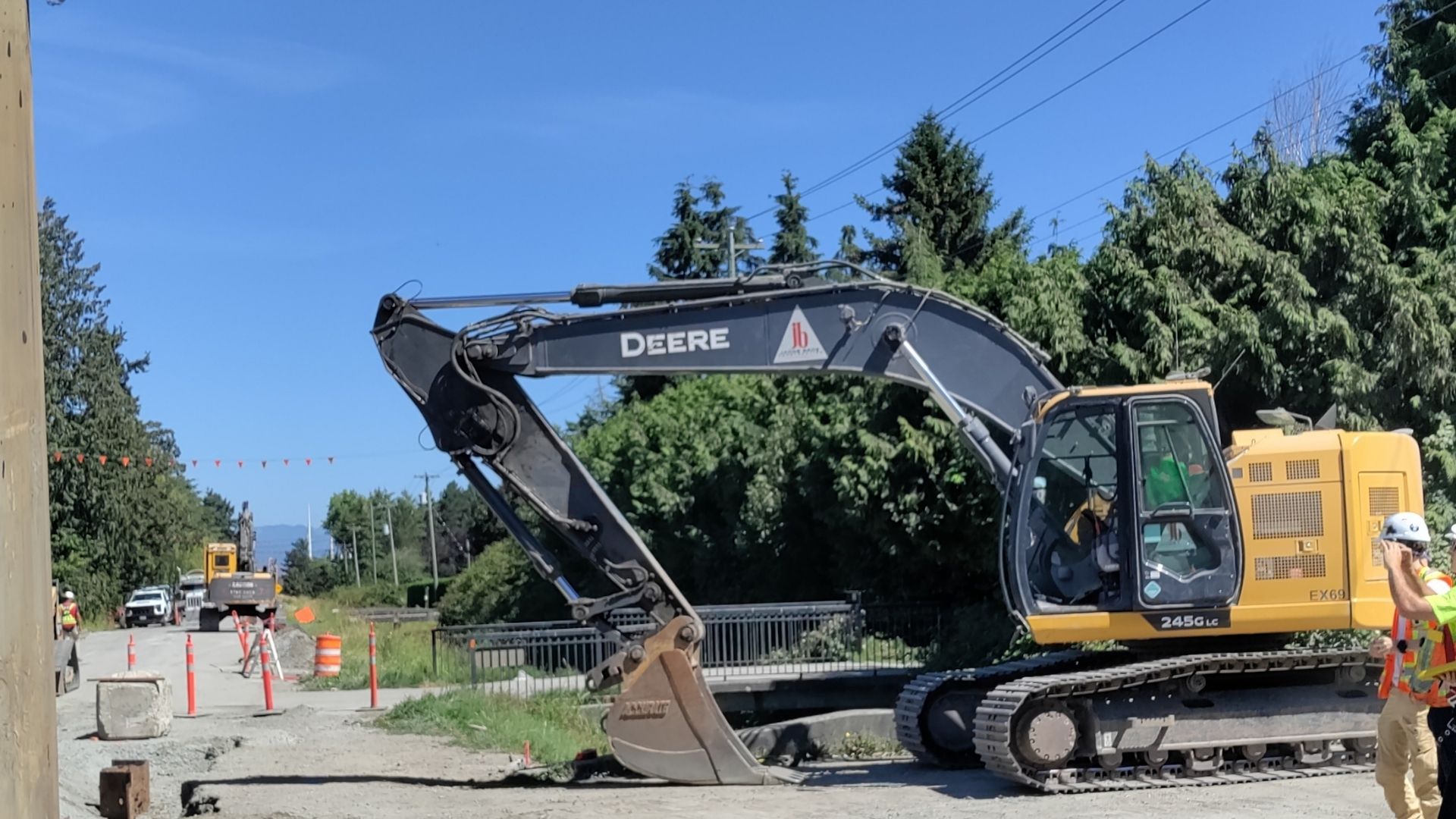
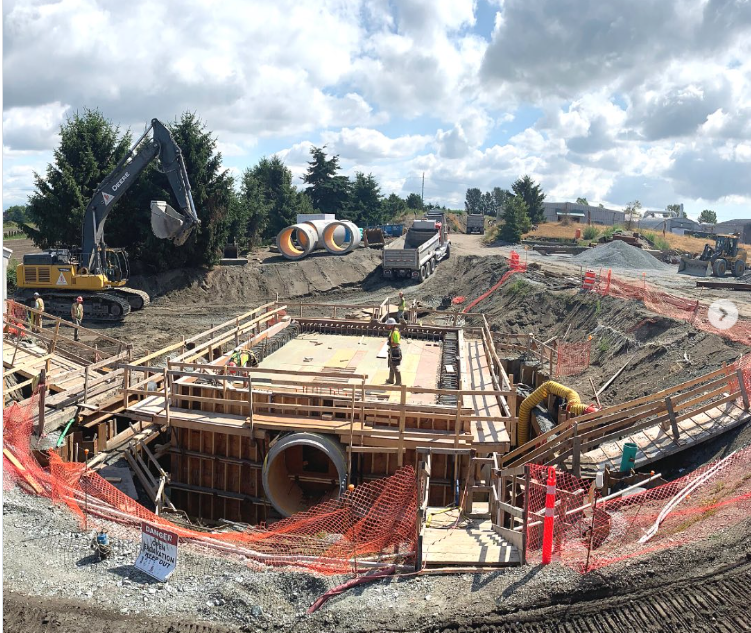
The Gilbert Trunk Sewer No.2 project is a critical infrastructure initiative by Metro Vancouver, involving the construction of a new sewer line parallel to the existing, deteriorating pipe that has reached its full capacity. The project spans approximately 6.2 km along Gilbert Road in Richmond, BC, with pipe diameters up to 1,800 mm installed at depths of up to 4 metres. The work includes the construction of six concrete diversion chambers at various intersections, and is divided into three main construction segments.
The primary objectives of the project are to increase conveyance capacity, reduce the risk of backups, accommodate population growth, and provide system redundancy within the regional wastewater network.
Noise and Vibration Challenges
Construction activities took place in an urban environment, along a major roadway, and in close proximity to residential neighborhoods, making noise and vibration control a crucial factor in mitigating community impacts. The complexity of the construction operations – including utility conflicts, deep trench excavation requiring dewatering and sheet piling, and the continual movement of equipment along the pipeline route – introduced significant and variable noise and vibration sources.
The project was required to comply with both the City of Richmond’s Noise Bylaw and Metro Vancouver’s Public Impact Mitigation (PIM) requirements, which together establish noise criteria for construction activities. These requirements include limits on noise levels from individual equipment and combined construction activities, as well as restrictions related to hours of work, and noise and vibration levels at noise sensitive properties and structures. Managing compliance across changing construction phases and locations required a proactive and flexible acoustical approach.
Scope of Services
As the acoustical consultant for the project, BKL proposed and implemented a construction noise and vibration assessment and management strategy designed to support regulatory compliance, risk management, and effective community relations. Our scope of services included:
- Baseline noise evaluation: Conducted unattended noise measurements at multiple locations along the Project alignment to quantify pre-project noise levels.
- Project initiation and equipment screening assessment: Reviewed project data to predict and assess noise and vibration levels at a reference distance of 15 m and at noise and vibration sensitive receiver locations. This included reviewing available manufacturer noise data, or standardized reference data, with the results summarized in a technical report submitted to the Corporation.
- Initial site visits at commencement of construction: Conducted attended noise measurements at the commencement of construction activities, and prepared a technical report documenting measured construction noise levels associated with early-stage operations.
- Develop noise mitigation recommendations and management strategies where predicted or measured noise levels exceed project criteria.
- Additional site visits: Performed attended noise measurements at the start of each construction phase involving different equipment and activities, and responded to community noise complaints with objective, data-driven assessments. Monitoring results were documented through updates to the technical reporting, providing consistent and comparable records over the course of the project.
- Additional noise mitigation: Developed practical noise mitigation measures and field reviewed their implementation for Steveston London Secondary School and select noise sensitive businesses along Gilbert Road.
Project Benefits
Working with AECOM and the project management team, our proactive acoustical consulting services delivered the following benefits:
- Supporting community relations: The ability to monitor, assess, and respond to noise concerns provided Metro Vancouver with objective, technical information to support transparent and effective communication with the public.
- Mitigating risk and disruption: Early identification and verification of equipment noise levels, screening of vibration levels from construction activities, combined with ongoing monitoring across evolving construction phases, helped identify potential issues before they escalated, reducing the risk of complaints, disputes, or work stoppages.
- Developing practical and effective noise mitigation: By understanding what types of mitigation are effective, we were able to provide noise mitigation recommendations that would benefit stakeholders, and avoid unnecessary costs to implement ineffective mitigation measures.
- Submitting clear and concise documentation: While noise and vibration issues can be complex, BKL was able to prepare technical memoranda and reports in such a way that minimizes technical jargon, provides clear, actionable descriptions for mitigation recommendations, and documents only relevant data that would be useful for regulatory compliance or for keeping project records.
BKL’s experience in construction noise and vibration assessment and management for complex infrastructure projects, combined with a strong understanding of local regulatory requirements, allowed us to tailor services to the mobile and phased nature of the work. Our acoustical consulting helped ensure that the Gilbert Trunk Sewer project not only achieved its infrastructure objectives, but also upheld Metro Vancouver’s commitment to minimizing impacts on the surrounding community.
Image courtesy of Jacobbros_construction
Explore more projects here.
Project name:
Gilbert Trunk Sewer
Location:
Richmond, BC
Year Completed:
2026
Project length:
Approximately 6.2 km along Gilbert Road